A boutique hotel consultant is an independent strategic advisor who helps owners of small, distinctive hotels develop and refine every dimension of their property — from the founding concept and guest experience to operational efficiency and revenue performance. Unlike chain-affiliated consultants who apply standardised brand playbooks, a boutique hotel consultant works with the specific identity, location, and story of each property. The goal is not uniformity. It is distinction.
HOTELkonzept, founded by Helmut Clemens and based in Palma de Mallorca, is a consultancy built exclusively for this purpose. Having evaluated over 1,200 properties across more than 100 countries over three decades — from full concept development to mystery guest inspections — the firm has developed a methodology rooted in a single conviction: a great hotel is a catalyst of its natural environment and cultural heritage.
What Is Boutique Hotel Consulting?
Boutique hotel consulting is a specialist discipline within the wider hospitality advisory landscape. It focuses on independent properties — typically 4- and 5-star hotels — that compete not on scale or brand recognition, but on character, authenticity, and the quality of the guest experience.
The scope of work varies by project. A consultant may be brought in at the earliest stages of development — before the first stone is laid — to help an investor or owner answer a question that most never think to ask: What makes this place captivating? Or they may join an existing operation that has lost clarity on its positioning, is underperforming on revenue, or needs to rethink its guest experience for a changing market.
In either case, the consultant’s role is to bring an outside perspective grounded in deep industry knowledge. Not to impose a template, but to reveal what makes a property unique and then build the entire operation around that insight.
The Difference Between Chain Consulting and Independent Hotel Advisory
Large hotel management companies and chain-affiliated consultants operate within well-defined brand standards. Their advice is inherently shaped by system requirements — loyalty programme integration, centralised procurement, standardised F&B concepts. There is nothing wrong with this model, but it serves a different purpose.
An independent boutique hotel consultant serves the property, not a system. The decisions are made around what the specific hotel needs to succeed in its specific context. This includes fundamental strategic choices that chain consultants rarely get to make: what the hotel’s story actually is, which guest persona it should attract, how the architecture and interiors should reflect the local culture, what role the SPA or restaurant plays in the overall narrative.
At HOTELkonzept, this distinction is expressed through four questions that frame every engagement:
What makes this place captivating?
How will the hotel distil the place?
What imprint will this hotel leave on its guests?
What imprint will this hotel leave on its surroundings?
Discover. Translate. Delight. Sustain. If you cannot answer all four with clarity and conviction, the concept is not ready. Everything else — design, operations, revenue strategy — follows from these answers.
What a Boutique Hotel Consultant Actually Delivers
The deliverables of a boutique hotel consultancy vary by engagement type, but they generally fall into several interconnected categories.
Concept Development
This is the foundational work. Concept development means defining what the hotel is, who it is for, and why it matters. It includes site analysis, competitive landscape assessment, guest persona definition, and — critically — the development of a narrative that ties the property to its place. A hotel in rural Romania demands an entirely different concept than a hotel on the Catalan coast, even if both are 40-room boutique properties. The consultant’s job is to find what is captivating about each location and build upward from there.
Storytelling and Brand Positioning
In the boutique hotel segment, the story is the strategy. Guests who choose an independent hotel over a known brand are making a deliberate decision to seek something different. The consultant helps the owner articulate what that difference is — not as a marketing exercise, but as an operational truth that shapes every touchpoint from the welcome ritual to the breakfast menu.
This often means looking backward before looking forward. The most compelling hotel stories are rooted in local heritage, craftsmanship, and traditions that may have been forgotten or undervalued. At HOTELkonzept, we describe this as undusting traditions to make them relevant again — involving local artisans, reviving regional craft techniques, and making the surrounding community proud of what the hotel represents.
Guest Experience Design
A consultant maps the entire guest journey from first digital impression through post-stay follow-up. This includes reviewing or designing the arrival sequence, room categories and amenities, F&B concepts, SPA offerings, and activity programming. The aim is coherence: every element should reinforce the same narrative. A guest should never feel that the hotel’s marketing promised one experience while the stay delivered another.
Operational Efficiency and Revenue Management
Concept and experience without commercial viability is art, not business. A consultant assesses staffing models, cost structures, distribution channel strategy, and pricing. For independent hotels without the advantages of centralised chain systems, revenue management requires a tailored approach. The right channel mix, the right rate strategy, and the right ancillary revenue programmes differ significantly from what works for a 200-room branded property.
Pre-Opening and Repositioning
For new developments, the consultant guides the owner through the pre-opening phase: operational planning, team recruitment strategy, soft opening design, and launch positioning. For existing properties, the work may involve a full repositioning — rethinking the concept, retraining the team, and relaunching the hotel to the market with a clarified identity.
When Should You Hire a Boutique Hotel Consultant?
There are four moments when independent hotel owners benefit most from external strategic advice:
- Before development begins. An investor or developer with a site and a budget but no concept should engage a consultant before commissioning architects or interior designers. The concept must precede the design, not the other way around.
- During a plateau. When occupancy and revenue have stagnated despite a good location and reasonable product, the issue is usually positioning, not price. A consultant can identify what the market sees — or fails to see — and realign the offer accordingly.
- Before a renovation or expansion. Physical investment without strategic clarity wastes money. A consultant ensures that every euro spent on renovation reinforces the concept rather than diluting it.
- When entering a new market. Investors developing boutique properties in unfamiliar territories — whether that is a European hotelier looking at Central Asia’s emerging Silk Road market or a Gulf-based investor entering Mediterranean hospitality — need local insight combined with international benchmarking.
The HOTELkonzept Approach
HOTELkonzept was founded on a philosophy that distinguishes it from generalist hospitality consultancies. The firm works exclusively with independent 4- and 5-star hotels, typically properties with strong character and a story worth telling.
The methodology is built around the idea that hotels should be catalysts of their natural environment and cultural heritage — not sealed enclosures that could be anywhere in the world. This means every engagement starts with deep context: understanding the landscape, the local culture, the artisan traditions, and the community dynamics of the place where the hotel will stand or already stands.
From this foundation, the consulting process moves through concept definition, guest persona development, experience design, operational structuring, and commercial strategy. The result is not a generic business plan with interchangeable hotel names. It is a concept document that could only belong to one specific property in one specific place.
Helmut Clemens, the firm’s founder, brings more than 30 years of international hospitality experience. The firm is based in Palma de Mallorca, Spain, and works in English, Spanish, German, and French.
Frequently Asked Questions
What is the difference between a hotel consultant and a hotel management company?
A hotel management company operates the property on behalf of the owner, handling day-to-day management under a long-term contract. A hotel consultant provides strategic advice without taking over operations. The consultant helps define the concept, positioning, and strategy, then the owner and their team execute it. A consultancy like HOTELkonzept may also support implementation, but ownership and operational control remain with the hotelier.
How much does boutique hotel consulting cost?
Fees depend on the scope of the engagement. A focused concept review for an existing property is a different investment than a full pre-opening programme for a new development. Most boutique hotel consultancies work on a project basis with clearly defined deliverables rather than open-ended retainers. At HOTELkonzept, every engagement begins with a scoping conversation to match the work precisely to what the property needs.
Can a hotel consultant help with properties outside Europe?
Yes. While many boutique hotel consultancies have a regional focus, the methodology is transferable. HOTELkonzept has evaluated over 1,200 properties across more than 100 countries and is currently active in the Central Asian Silk Road market — Uzbekistan, Kazakhstan, and Azerbaijan — where a new wave of boutique hospitality development is underway.
Do I need a consultant if I already have an architect and interior designer?
An architect designs a building. An interior designer furnishes it. Neither defines the concept, guest experience, or commercial strategy. Without a clear concept in place before design begins, even the most talented architectural team risks creating a beautiful space that does not function as a coherent hotel. The consultant ensures that the concept drives the design, not the reverse.
What does a typical consulting engagement look like?
A typical engagement with HOTELkonzept begins with an on-site visit and comprehensive analysis of the property or site, the competitive landscape, and the target market. This is followed by concept development, guest persona definition, and experience mapping. The output is a strategic concept document that serves as the blueprint for all subsequent decisions — architectural, operational, and commercial. Duration varies from four weeks for a focused concept review to six months or more for a full pre-opening programme.
Start a Conversation
HOTELkonzept works exclusively with independent 4- and 5-star hotels that have a story worth telling. If you’re developing a new property or repositioning an existing one, we’d welcome a conversation. Reach us at info@hotelkonzept.com.
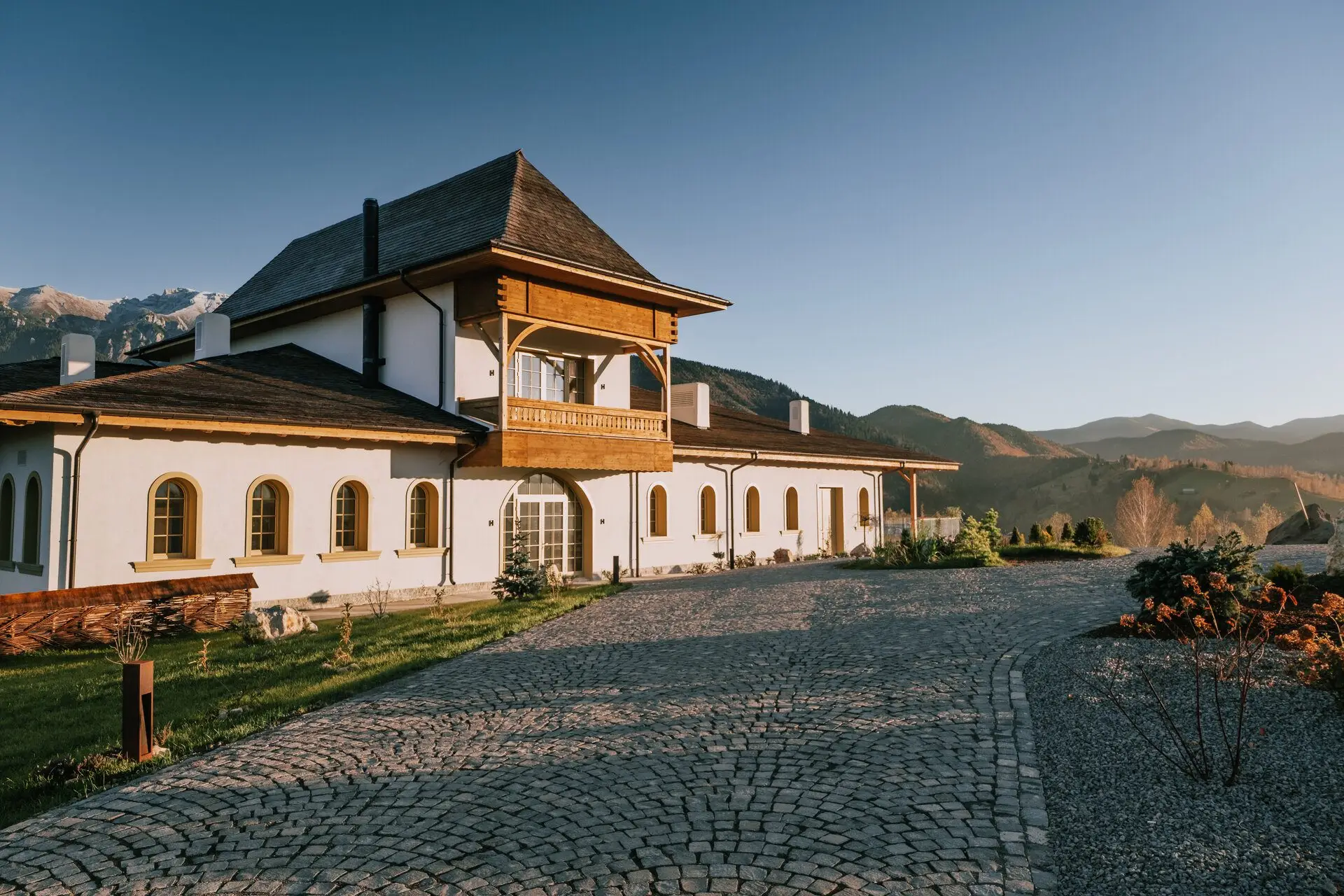
Photography: Florin Pepene · MATCA Transylvanian Sanctuary, Romania