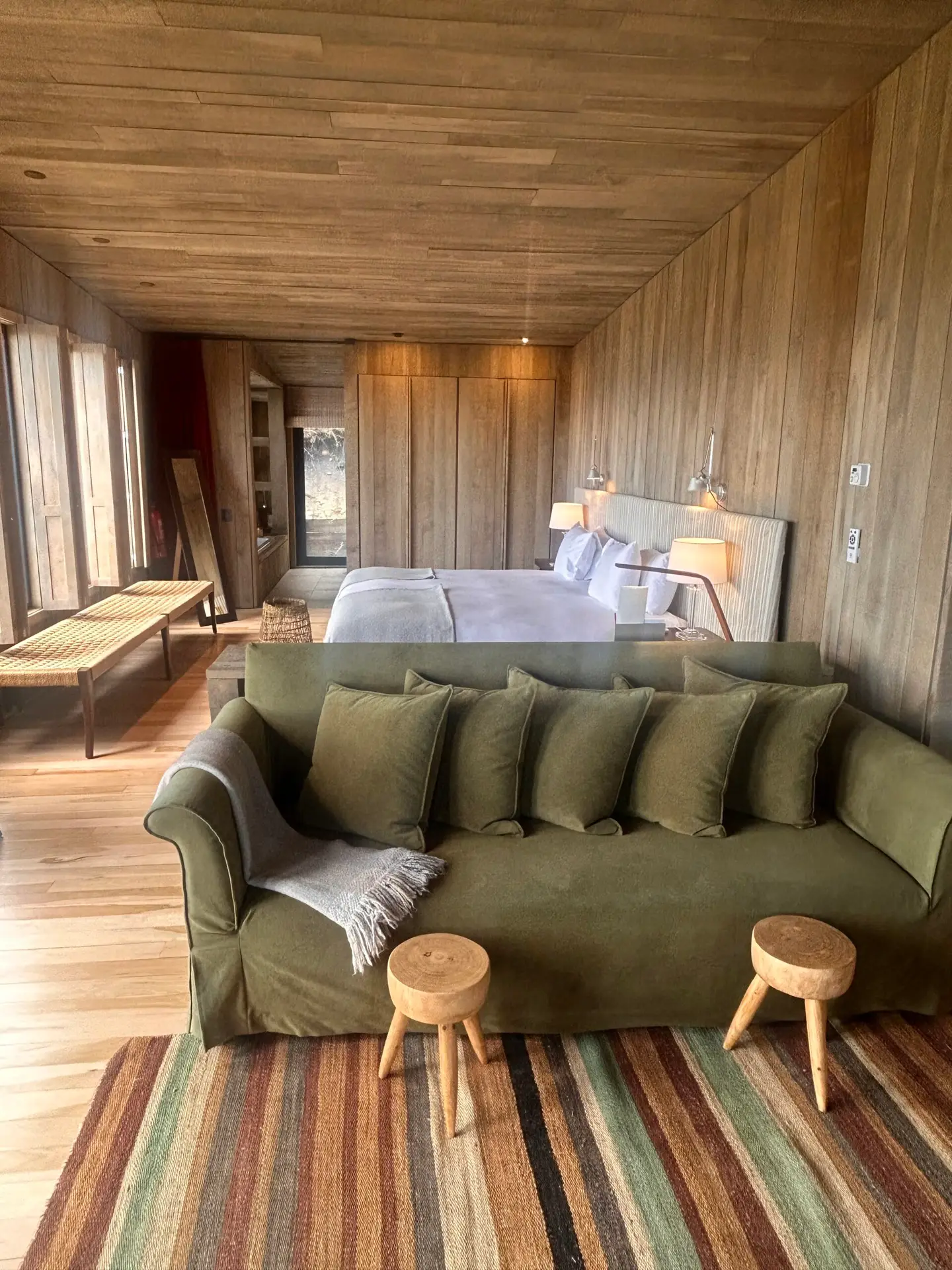
Hotel concept development is the foundational discipline that defines what a hotel is, who it serves, why it matters, and how it will operate within its cultural and natural context. It is not interior design. It is not branding. It is not operational procedure. Rather, it sits upstream of all three — a strategic blueprint that emerges from a specific place and translates into actionable decisions across every dimension of the hotel business.
Many independent hoteliers approach concept development as an afterthought: acquire or commission a property, hire an architect, decide on theme or aesthetic, then figure out operations. This sequence is backwards. The place itself is the starting point. A hotel concept that ignores or overrides the authentic character of its location will always feel contrived, will struggle to attract the right guest, and will fail to justify premium positioning.
At HOTELkonzept, we have evaluated over 1,200 properties across more than 100 countries — from full concept development to mystery guest inspections. Across that range of projects, the clearest correlation between hotel success and hotel failure is not size, location prestige, or capital budget. It is the clarity and authenticity of concept.
What Is Hotel Concept Development?
Hotel concept development is the process of answering four fundamental questions:
What makes this place captivating?
This is site analysis married with emotional intelligence. Not merely geographic coordinates, climate zone, or infrastructure proximity. What stories does the place contain? What cultural heritage lives here? What natural systems define it? What human rhythms and traditions have evolved in this location? A village built around a medieval monastery in Oltenia, Romania has a concept seed embedded in its very structure — the interplay between monastic tradition, Orthodox Christianity, local woodcraft guilds, and the wild Olt river. A lakeside town in Catalunya, Banyoles, carries within it the heritage of Catalan rowing culture, volcanic terroir, agricultural tradition, and Mediterranean light. The best concepts don’t invent narratives; they excavate them.
How will the hotel distil the place?
This is the design and programming question. Once the authentic character of the place is understood, how will the hotel capture and amplify it? Which traditions will you uncover and make relevant again? What guest experiences will allow visitors to encounter the place directly rather than through a filtered, staged version? This is where the four-question framework becomes tangible: the hotel distils place through the physical language of architecture and interiors, through the menu and beverage program, through activities and partnerships with local providers, through the expertise and storytelling of staff.
What imprint will this hotel leave on its guests?
A hotel concept should create a specific psychological and emotional effect on guests. Not generic comfort or convenience — those are table stakes. Rather: what will guests remember? What will they understand about themselves or the world that they did not before? A well-conceived hotel becomes a catalyst for discovery, whether that discovery is about the place, the culture, or the guest’s own capacity to engage more deeply with unfamiliar environments.
What imprint will this hotel leave on its surroundings?
This is the sustainability and community integration question, but framed honestly. Will the hotel extract value from the place or contribute to it? Will it create economic opportunities for local craftspeople, farmers, guides, artisans? Will it restore or preserve cultural practices that would otherwise fade? Will it protect environmental systems or degrade them? A strong hotel concept recognizes that the hotel is not separate from the place — it is embedded within it, and its long-term viability depends on the vitality of the community and landscape it inhabits.
These four questions form the backbone of every project we undertake. They appear throughout the concept document, the design brief, the operational manual, and the training protocol for staff.
Site Analysis and Cultural Context
The foundation of concept development is rigorous site analysis. This goes far beyond the property boundaries. It requires understanding the region’s history, geography, economic patterns, cultural hierarchies, and seasonal rhythms.
Begin with the physical place. What natural systems define the location? Is there a water body that shaped settlement patterns? Are there geological features — volcanic terrain, limestone karst, alpine meadows — that create visual and spiritual significance? What is the climate, and how have inhabitants adapted to it over centuries? A Mediterranean hillside is fundamentally different from a river valley, which is different from moorland, and those differences cascade into every aspect of what a hotel can authentically be.
Then understand cultural heritage. What traditions, crafts, celebrations, and knowledge systems are alive in this place? Are there architectural traditions specific to the region? Local building techniques that emerged from available materials and climate? Culinary traditions that reflect terroir and history? Religious or spiritual practices that remain woven into community life? The strength of a hotel concept is often proportional to its willingness to take cultural traditions seriously rather than treating them as aesthetic backdrop.
Economic and social context matters too. Who lives here currently? What are the primary economic activities? Are you in a place of demographic decline, stability, or growth? Are local people proud of their heritage or have they been encouraged to see it as backward? This determines whether local partnerships will be genuine collaboration or extractive. It determines what wages and working conditions are realistic and fair. It determines whether the hotel can claim authenticity or will always be experienced as an outside imposition.
Finally, understand seasonality and visitor patterns. When do people naturally visit this place, and why? Are there specific seasons tied to agriculture, weather, or cultural events? Understanding natural rhythms allows a hotel concept to work with the place rather than against it — creating programming and staffing strategies that align with how the place actually lives.
Defining the Guest Persona
Once the place is understood, define with absolute precision who this hotel is for. Not ‘luxury travelers’ or ‘cultural tourists’ — those are meaningless categories. Instead: who is the guest who will come to your location and who will genuinely value what you offer?
The guest persona emerges from the intersection of three elements: the place, the hotel’s positioning, and authentic market demand. An independent hotel in a medieval monastery village in Oltenia will not attract the same guests as a modern boutique hotel on a beach. A guest who values authentic cultural immersion, who is willing to spend time learning local crafts or hiking with guides who know the territory, who reads history before visiting — that is a different person from someone seeking poolside cocktails and Instagram backdrops.
This specificity is uncomfortable but necessary. Some independent hoteliers resist defining their guest narrowly because they fear lost revenue. The opposite is true. A hotel that tries to appeal to everyone appeals to no one. Clarity about your guest allows you to design spaces, select decor, curate food offerings, hire staff with specific dispositions, and create experiences that will satisfy your actual guest deeply while inevitably disappointing others. This is not a constraint — it is the basis for differentiation and pricing power in competitive markets.
Defining the guest persona also determines your distribution strategy, your marketing tone, your partnership decisions, and your operational standards. A hotel aimed at cultural immersion travelers requires different staff training, different booking channels, different partnerships with local guides and artisans than a hotel aimed at business travelers or families. Misalignment between guest persona and operations is a source of constant friction and mediocre reviews.
Storytelling as Strategic Framework
The strongest hotel concepts are built on authentic storytelling. Not marketing narratives — stories. Stories that are rooted in genuine cultural heritage, in the specific properties and qualities of the place, in the lives of people who inhabit it.
Storytelling serves a strategic function beyond marketing. It is how a hotel integrates its various systems — architecture, F&B, SPA, activities, guest services — into a coherent whole. Every element of the hotel tells or reinforces the same story. The restaurant doesn’t serve generic Mediterranean cuisine; it serves dishes that reflect the specific agricultural and culinary traditions of the region. The SPA doesn’t offer generic wellness treatments; it uses local herbs, thermal waters, or traditional wellness practices rooted in the culture. The room furnishings aren’t chosen for aesthetic trend; they reflect local craft traditions or historical styles authentic to the place.
This is where the phrase ‘undust traditions to make them relevant again’ becomes operative. Many regions possess craft traditions, agricultural knowledge, wellness practices, cultural ceremonies, or artistic practices that are no longer central to contemporary life but remain alive in community knowledge. A strong hotel concept identifies these traditions, understands why they matter, and creates frameworks for their continuation and transmission. An artisan weaver whose technique is no longer economically viable becomes a revenue opportunity for a hotel that understands why that weaving tradition matters culturally and aesthetically. A traditional recipe or preparation method becomes the foundation of the hotel’s culinary identity.
Storytelling also simplifies operational decision-making at every level. When a housekeeper understands the story of the place and the hotel’s relationship to it, she understands not just what to do but why. When a chef knows the sourcing philosophy and cultural narrative behind the menu, menu decisions become more coherent and intentional. When a front desk staff member can explain to guests why certain partnerships with local guides, craftspeople, or providers exist, the hotel transitions from being a service provider to being a gateway into authentic encounter with place.
From Concept to Operational Reality
A concept lives or dies in execution. The distance between a well-crafted concept document and actual guest experience is where most independent hotels fail.
Operational reality requires translating concept into concrete systems. What does it mean operationally that your hotel ‘leaves a positive imprint on its surroundings’? It means specific sourcing policies, payroll structures, employment practices, partnerships with local providers, and staff training that embeds this value throughout the organization. It is not enough to state it as philosophy; it must be embedded in purchasing, human resources, and guest service protocols.
The four methodology questions become operational guidelines. What imprint will this hotel leave on its guests? translates into specific program design — which guided experiences do you curate? How do you train staff to be cultural interpreters rather than service robots? What happens in the first five minutes of a guest’s stay that signals to them that they are somewhere authentically different? These are not marketing questions; they are operational design questions.
What imprint will this hotel leave on its surroundings? becomes staff hiring philosophy. You hire people with deep roots in the place, people who know local producers and artisans, people who understand cultural heritage not as outsiders but as inheritors. You invest in training because you are investing in the hotel’s ability to maintain authentic relationships with the community. You pay fairly because you recognize that artisans, guides, and local providers are not cost centers but crucial partners whose expertise and authenticity directly create your hotel’s value proposition.
Operational reality also requires honesty about constraints. Not every concept works equally well at every scale. Some concepts require higher staffing ratios. Some require seasonal closures. Some require specific capital investments that may not yield quick financial returns. Understanding these constraints at the conceptual stage, rather than discovering them mid-project, allows for realistic design and financial modeling.
The Independent Hotel Advantage
Brand-managed and franchise hotel chains operate under standardization imperatives. Brand-managed and franchise hotel chains operate under standardization imperatives. A hotel brand must deliver consistent standards across many properties. This consistency is valuable in certain markets but inherently incompatible with place-specific authenticity.
Independent hotels have a fundamental structural advantage: they can be genuinely specific. A small independent hotel in a particular place can develop a concept that would be impossible to replicate elsewhere and would be economically irrational to attempt to standardize. This specificity is not a weakness to overcome; it is a competitive moat that chains cannot replicate.
The independent hotel advantage in concept development manifests in several ways. First, no corporate brand guidelines constrain design or programming decisions. You can source furniture from local woodcraft traditions rather than corporate suppliers. You can build a menu entirely around local seasonal agriculture rather than global supply chain standardization. You can hire staff based on their relationship to place rather than hospitality credential boxes checked.
Second, financial models can support longer payback periods. You don’t need to achieve 40% EBITDA margins to justify the investment to a corporate parent. This allows capital allocation toward elements that strengthen concept authenticity even if they are not revenue-positive in the short term — restoration of a historic building, partnership with a local artisan collective, installation of renewable energy systems that align with environmental philosophy.
Third, decision-making can move at the speed of thoughtfulness rather than corporate approval cycles. If site analysis reveals an opportunity to partner with local farmers on a specific seasonal program, you can decide and implement quickly. If a guest experience idea emerges from staff insight about local culture, you can iterate and test without asking permission from a corporate office thousands of kilometers away.
Independent hotels that commit to rigorous concept development and authentic execution regularly achieve premium positioning and pricing that would be impossible based on property class or location alone. They attract specific guests who value authenticity over standardization. They generate stronger loyalty because guests understand themselves as having encountered something genuine rather than a carefully managed brand experience. They create working environments where staff feel ownership and pride in their role as cultural interpreters rather than rule-followers.
Frequently Asked Questions
How long does hotel concept development typically take?
Timeline depends on project scope and complexity. For a new-build boutique property starting from land acquisition through opening, expect 18-36 months for full concept development, design, permitting, construction, and staff training. For a repositioning or conversion of an existing building, 6-12 months is typical. The critical variable is not speed but depth — rushing concept development to accelerate construction timelines creates misalignment between concept and operations that haunts a property for years.
Should we complete concept development before commissioning the architect?
Yes, absolutely. The architect must be designed within the framework of a clear concept, not the reverse. Engaging an architect before concept is defined is like commissioning a composer before you have decided what story the symphony tells. Concept drives spatial organization, material choices, building systems, and aesthetic language. A strong concept document becomes the architect’s creative brief and the basis for evaluating design proposals.
Can we develop a new concept for an existing hotel?
Yes, and increasingly common. Repositioning existing properties requires understanding what concept was implicit in the original design (or lack thereof), whether that concept remains relevant, and what would need to change physically and operationally to move toward a new, more coherent concept. Often this reveals that major elements — restaurant, SPA, activity programming — need redesign to align with a refreshed concept. This is more complex than concept development for new properties because you are constrained by existing structural and financial realities.
What is the difference between hotel concept and hotel branding?
Concept is the foundational answer to what the hotel is, rooted in place and informed by market reality. Branding is the external expression and communication of concept. A strong concept can be poorly branded, creating a credibility gap. Conversely, no amount of sophisticated branding can compensate for a weak or inauthentic concept. We recommend developing concept fully before investing significantly in branding, though brand strategy should inform concept decisions around guest persona and positioning.
Start a Conversation
HOTELkonzept works exclusively with independent 4- and 5-star hotels with stories worth telling. If you are developing a new property or repositioning an existing one, we would be glad to talk. Write to us at info@hotelkonzept.com.