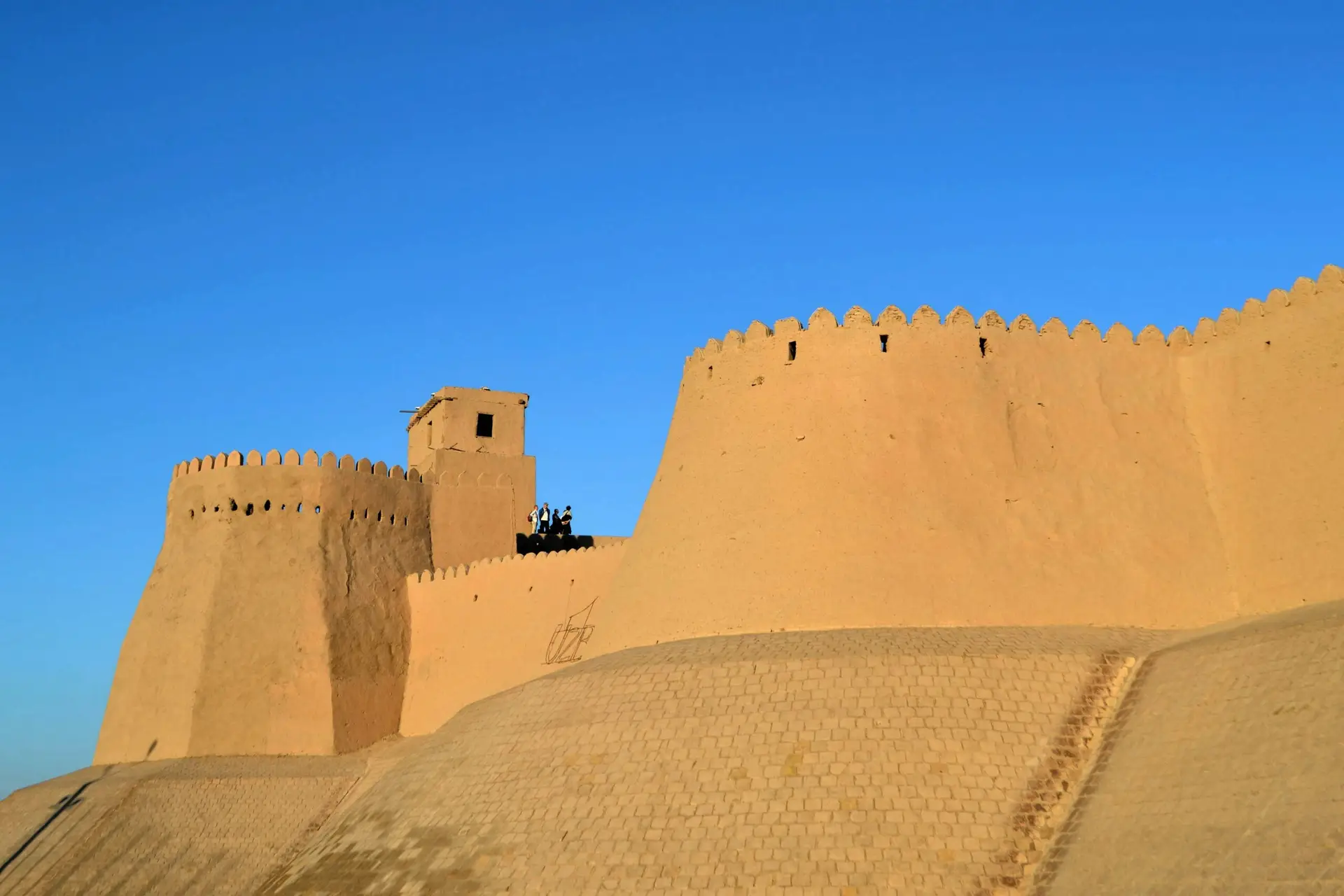
The Central Asian hospitality market is entering a transformative phase. Uzbekistan, Kazakhstan, and Azerbaijan are emerging as compelling investment destinations for hotel developers and investors seeking exposure to untapped demand, rich cultural heritage, and high-growth potential. This guide examines market fundamentals, investor archetypes, and the strategic advantages of independent hotel positioning on the Silk Road.
Why the Silk Road Is Hospitality’s Next Frontier
Central Asia sits at a geographic and cultural crossroads. The historic Silk Road cities of Samarkand, Bukhara, and Khiva represent some of the world’s most architecturally significant heritage destinations. Yet outside a handful of major cities, the region remains dramatically underrepresented in international hotel distribution networks. This creates both a gap in supply and an extraordinary window of opportunity.
Capital is beginning to flow. Sovereign wealth funds from the Gulf and Asia are scouting Central Asian assets. Private investors — many with family roots in the region — are exploring homecoming opportunities. International hotel groups are launching dedicated Central Asia expansion programs. But the capital arriving is still heavily concentrated in standard-form chains and branded products.
This is where independent positioning gains its edge. These markets don’t need more branded inventory. They need concepts. Hotels that distil the essence of place, that weave local culture and heritage into every operational detail, that create genuine experiences rather than duplicated templates. The window for differentiated, well-capitalised independent hotels is open now. In five years, this will be a crowded market. The advantage accrues to those who move first.
Uzbekistan: Market Overview & Opportunity
Uzbekistan is the priority market. The country has undergone remarkable transformation in the last five years. Tourism arrivals have grown steadily, visa policies have liberalised significantly, and the government has signaled clear investment incentives for tourism infrastructure. The country received over 6 million international visitors in 2022 — a figure that would have been unthinkable just a decade earlier. For 2025 and beyond, projections suggest continued double-digit growth in international arrivals.
The Four Historic Cities
Samarkand, Bukhara, Khiva, and Tashkent form the primary tourism axis. Each has distinct characteristics and investment profiles.
Samarkand: The jewel of the Silk Road, with Registan Square — arguably Central Asia’s most visually stunning architectural ensemble — at its heart. Tourism demand is robust and growing. A high-quality independent hotel positioned for discerning international travellers would command premium positioning. Average daily rates for quality accommodation remain substantially below comparable heritage cities in Europe or Turkey.
Bukhara: A more intimate alternative to Samarkand, with extraordinary bazaars, mosques, and madrasas. Fewer international hotels exist here than in Samarkand, creating a more pronounced supply gap. Investors willing to develop in a secondary market may find exceptional returns.
Khiva: The most dramatically preserved medieval city, with walls and fortifications that feel genuinely unchanged. It remains relatively underdeveloped from a tourism infrastructure perspective, which presents both risk and opportunity. A pioneering independent hotel here would face lower competition but also education of the market.
Tashkent: The capital, modernising rapidly, with a growing business travel segment and international conferences. The hotel market is more developed here, but the opportunity for distinctive positioning remains.
What unites these cities is extraordinary cultural depth. Samarkand alone represents a convergence of Persian, Central Asian, and Islamic architectural traditions spanning centuries. Bukhara’s bazaars still function as they have for 1,000 years. Khiva’s city walls enclose an entire medieval world essentially preserved. These are not theme parks. They are living heritage. The investor’s opportunity is to position hotels that honour and reflect this heritage, not simply build beside it.
Market Fundamentals
Uzbekistan’s tourism infrastructure remains undercapitalised relative to demand. The government aims to increase international arrivals to 10 million annually by 2030. Policies support this aggressively: simplified visas, tax incentives for tourism development, and infrastructure investment in both historic city centres and wider regional connectivity. A five-star international hotel in Samarkand today may still command rates 40-50% lower than equivalent properties in Turkey or Central Europe, creating both opportunity for developer returns and clear pricing headroom for quality product.
The investor base is expanding. Uzbek diaspora members with capital are returning. Private equity from the region is deploying capital. Sovereign wealth entities are conducting formal feasibility studies. The market remains early-stage from an international hospitality perspective, but the velocity of interest is unmistakable.
Kazakhstan: The Almaty-Astana Corridor
Kazakhstan presents a different investment thesis. The market is somewhat more developed and more competitive than Uzbekistan, but it also offers higher visibility and greater infrastructure maturity. The country is split between two clear poles: Almaty, nestled beneath the Tian Shan Mountains with a cosmopolitan, sophisticated market; and Astana, the purpose-built capital, growing rapidly with diverse commercial and diplomatic demand.
Almaty: Mountain Heritage and Urban Sophistication
Almaty is Kazakhstan’s most mature tourism market. Located at the junction of mountains, steppe, and urban development, it attracts regional business travellers, international tourists, and adventure seekers. The hotel market here is more developed than in Uzbekistan’s heritage cities, but there remains clear room for distinctive positioning. The immediate mountain backdrop creates natural differentiation — a hotel concept centred on the Tian Shan experience, accessible to the city, would stand apart from Almaty’s existing inventory.
Infrastructure quality is high. The city has airports with international connectivity, modern telecommunications, sophisticated restaurants and retail. It feels like a Central Asian city that has genuinely integrated with global networks. For investors comfortable with somewhat higher competition and more mature market dynamics, Almaty offers clear pathways to operations and revenue.
Astana: Capital Investment and Diplomatic Demand
Astana represents deliberate, state-driven development. Built from steppe in the 1990s, it has emerged as a modern capital with distinctive contemporary architecture, government infrastructure, and growing international business activity. Hotel demand derives from government visitors, international conferences, diplomatic missions, and corporate expansion. The market is newer and less saturated than Almaty, but it is also more standardised — much of Astana’s current hotel inventory consists of branded chain properties.
The opportunity here is less about heritage and more about sophisticated urban hospitality. Hotels that offer exceptional design, service, and distinction within an urban context may thrive. Astana is still in active construction and expansion, creating a market where a well-positioned independent hotel could capture growth and establish brand presence early.
Azerbaijan: Beyond Baku
Azerbaijan represents the third priority within the Central Asian hotel market, though with significant potential. The country has transformed economically over the past two decades, driven by energy revenues and strategic diversification. Tourism is identified as a key growth pillar for the post-oil economy. Azerbaijan is also geographically positioned as a bridge between Central Asia and the Caucasus, creating connectivity advantages.
Baku: Oil Economy and Urban Modernity
Baku is a city of visual and cultural contradictions. The Old City — a medieval walled section — sits surrounded by Soviet-era neighbourhoods, which border ultra-modern seafront developments and contemporary architecture. The hotel market here is dominated by international brands and business-focused properties. The opportunity for independent positioning is more limited than in Central Asian heritage cities, but it exists.
A distinctive hotel concept that genuinely integrates the Old City heritage with contemporary urban design could capture a niche. Baku’s traveller base is diverse: business visitors, heritage tourists, and regional visitors. Premium pricing is possible, though the market is more competitive than Samarkand or Bukhara.
Beyond Baku: Wine Regions and Mountain Heritage
Azerbaijan’s broader tourist appeal extends beyond the capital. The country’s wine regions — particularly Lahij and the slopes of the Caucasus — represent genuine opportunities for heritage positioning and nature-based tourism. These areas remain dramatically underdeveloped from an international hospitality perspective. An investor willing to develop in these secondary locations would face lower initial demand but also lower competition and potential for first-mover advantage.
The Caucasus mountains themselves — within Azerbaijan’s territory — offer adventure and nature tourism opportunities. Trekking, mountain lodging, and nature-based experiences remain undercapitalised here relative to comparable destinations in the Alps or Central Asian mountains.
Investor Archetypes & Entry Models
Central Asian hotel investment attracts several distinct investor profiles, each with different capital requirements, risk tolerances, and operational approaches:
Sovereign Wealth and Government-Linked Capital
Official entities from the Gulf, Turkey, and Asia are increasingly scouting Central Asian hospitality assets. These investors typically seek long-term, stability-oriented returns, are comfortable with government relationships, and often view tourism development as part of broader regional economic diversification. They tend to favour larger, mixed-use projects and can access favourable financing terms. This capital is moving into Uzbekistan, Kazakhstan, and Azerbaijan simultaneously.
Private Local and Regional Investors
Business families, entrepreneurs, and companies with existing Central Asian operations are deploying capital into hospitality as part of portfolio diversification. This investor base tends to understand local market dynamics intimately, has relationships with government entities, and often seeks relatively higher returns than institutional capital. They are more flexible on project size and timeline. Many see hotel ownership as both commercial and status-oriented investment.
Diaspora and Heritage Investors
Uzbeks, Kazakhs, and Azerbaijanis living in Europe, North America, and the Gulf who wish to invest in their home countries or regions form a meaningful investor cohort. They bring capital, often international hospitality expertise, and deep emotional investment in project success. They are frequently motivated by both return and legacy. This investor base has proven particularly important in Uzbekistan, where family networks and trust relationships remain paramount.
International Hotel Groups and Operators
Major hospitality chains are beginning to expand into Central Asia, typically through management contracts with local developer partners. This capital provides operational expertise, brand distribution, and training infrastructure, but typically comes with constraints around concept flexibility and pricing positioning. Group investment has been more prominent in Kazakhstan and Azerbaijan to date, with Uzbekistan seeing slower international group penetration.
The Independent Hotel Advantage on the Silk Road
Hotels operating on the Silk Road face a fundamental choice: embrace standardised, branded positioning, or differentiate through concept, culture, and place-based design. The data and market dynamics favour the latter dramatically.
Why These Markets Demand Concept Over Beds
Travellers to Central Asia are self-selecting for adventure, cultural engagement, and authenticity. They are not seeking another branded chain — they can find those in Dubai, Istanbul, or Moscow. They are seeking gateways into a world that remains largely inaccessible to mass tourism. A hotel that simply provides beds with international standards misses the essential value proposition.
The independent hotel model succeeds here because it can be radically intentional about place. It can source local materials, employ local craftspeople, weave heritage into operations, celebrate local cuisine and culture not as amenities but as core identity. This is not possible at scale within branded systems, which require standardised operations, limited local variation, and cost discipline that often precludes deep cultural integration.
The Four Strategic Questions
HOTELkonzept’s methodology for place-based hotel development rests on four foundational questions. These questions are particularly powerful in the Central Asian context:
What makes this place captivating? This requires understanding not surface-level tourism appeal but the genuine essence of the location. In Samarkand, the answer involves centuries of Silk Road commerce, architectural brilliance, and cultural synthesis. In Almaty, it might involve mountain heritage, steppe ecology, and cosmopolitan Asian culture. A hotel concept must emerge from this analysis, not preceding it.
How will the hotel distil the place? This is about integration, not addition. A Samarkand hotel cannot simply “feature” local design elements. It must be constructed through a lens of place distillation. This shapes everything: material sourcing, staff training, culinary philosophy, spatial design, service protocols. The hotel becomes a concentrated expression of place.
What imprint will this hotel leave on its guests? The most distinctive hotels fundamentally shape how travellers understand a place. A guest arriving in Samarkand should leave transformed by their hotel experience — not just by the city’s monuments. The hotel is the lens through which guests engage with heritage. This requires exceptional specificity and intentionality in design and operation.
What imprint will this hotel leave on its surroundings? Hotels operate within heritage contexts. A Bukhara or Khiva hotel doesn’t simply extract value from place — it either contributes to or detracts from the cultural ecosystem it occupies. The strongest hotels become community anchors, employ local talent, support local craftspeople, and operate as genuine custodians of heritage. This builds brand distinction and creates resilience against future market changes.
Philosophy: Hotels as Catalysts
HOTELkonzept operates from a specific philosophy: hotels are catalysts of their natural environment and cultural heritage. This is not rhetoric. It shapes every decision, from site selection through operations. A hotel on the Silk Road should actively contribute to the vitality of its cultural context. This might involve training local hospitality workers, supporting heritage preservation, sourcing from local producers, or creating employment pathways. A hotel that simply extracts profit while surrounding heritage decays fails its fundamental mission.
Related to this is a commitment to “undusting traditions” — taking cultural elements that are historically rich but currently dormant and making them relevant again. A heritage bazaar might host traditional crafts workshops for guests. Local textile traditions might inform hotel design. Traditional music might accompany dining. This requires deep engagement with community, not superficial cultural borrowing.
FAQ: Central Asian Hotel Investment
Is the market ready for boutique and independent hotels?
Yes. The market is precisely at the stage where boutique positioning has maximum advantage. Demand for quality accommodation is real and growing, but supply remains constrained and heavily skewed toward either legacy Soviet-era facilities or new international chains. An independent hotel offering genuine five-star comfort integrated with authentic place-based design would find substantial demand and limited direct competition. This is a narrow window. In three to five years, more boutique entrants will arrive. The advantage is to early investors.
What are the primary market risks?
Political risk is real, particularly in Uzbekistan and Kazakhstan, which have experienced periodic policy shifts. However, tourism has become increasingly central to government diversification strategies across the region, which provides some mitigation. Currency risk is significant — the Uzbek som, Kazakh tenge, and Azerbaijani manat all have histories of volatility. Investors should structure returns with currency hedging or hard-currency revenue streams. Infrastructure risk exists in secondary cities, where electricity, water, and telecommunications reliability may be lower than in the West. Operational risk stems from limited local hospitality expertise — staffing, training, and management systems require investment. Cultural risk involves the possibility of cultural heritage being diminished or over-commercialised, which harms both social outcomes and long-term brand value. Successful investors plan for these risks explicitly rather than hoping they don’t materialise.
What is HOTELkonzept’s approach to new market entry?
HOTELkonzept is preparing to accompany investors and developers into Central Asian markets, not claiming established presence. The firm’s methodology is to enter via established network hubs — Istanbul and Dubai — and work with local partners to evaluate specific opportunities through the lens of place-based hotel development. We have evaluated over 1,200 properties across more than 100 countries, and we bring that analytical rigour to Central Asian opportunities. We are particularly interested in projects where investors understand that concept and cultural integration will drive long-term value, not just nightly rate arbitrage. We welcome inquiries from serious developer and investor partners.
Which investor type is best positioned to succeed?
Different investor archetypes succeed in different ways. Diaspora investors with genuine emotional investment in place, combined with access to capital, have demonstrated strong success — they understand context and can move decisively. Experienced international hospitality investors with disciplined capital deployment and realistic return expectations also succeed, particularly when they partner with strong local operators. Sovereign wealth and government-linked capital can succeed when it commits to multi-year timelines and genuine operational investment rather than expecting immediate returns. What separates successful investors from unsuccessful ones is rarely the investor type — it is the willingness to genuinely invest in concept development, to understand place deeply, and to resist the temptation to cut corners on guest experience or cultural authenticity to maximise short-term profitability.
Request the Full Market Briefing
This article provides strategic overview and positioning framework. Investors and developers seriously considering Central Asian hospitality entries should request HOTELkonzept’s full market briefing document, which includes detailed site assessments, financial modelling, operator profiles, and specific opportunity evaluation for Uzbekistan, Kazakhstan, and Azerbaijan.
To initiate a conversation about Central Asian hotel development, contact info@hotelkonzept.com and reference this article. We are prepared to accompany serious investors into these markets.